
🌿 BUD OF THE DAY DURBAN POISON

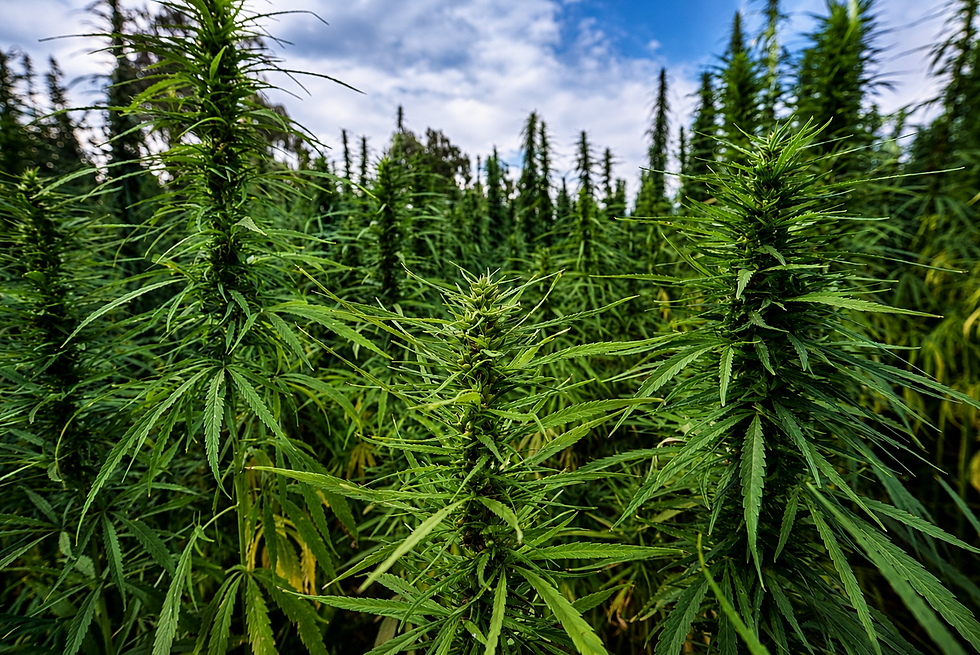
Durban Poison — South Africa’s Cannabis Legacy
From the hills around KwaZulu-Natal to cannabis communities around the world, Durban Poison has become one of South Africa’s most recognisable cannabis cultivars.
Before it became a familiar name on international menus and seed catalogues, Durban Poison was associated with the cannabis-growing regions of South Africa. Its exact origins are difficult to document with certainty, but historical accounts place its roots in the area around Durban and the surrounding KwaZulu-Natal region.
Unlike many modern cannabis cultivars created through deliberate crosses, Durban Poison is closely associated with South African landrace genetics — cannabis populations shaped over generations by their local environment and cultivation traditions.
🇿🇦 From Durban to the World
The international story of Durban Poison became particularly interesting during the late 1970s and 1980s.
Cannabis breeder and author Ed Rosenthal has explained that he encountered South African cannabis genetics in Amsterdam rather than personally travelling to South Africa to collect them — an important distinction because the story is often simplified online.
From there, South African genetics became part of the developing European cannabis seed scene. Breeders including Mel Frank, Nevil Schoenmakers and others played roles in preserving, selecting and distributing genetics associated with Durban.
The result was a cultivar that eventually moved far beyond its South African roots.
Today, Durban Poison is recognised internationally as one of the most famous cultivars carrying South African sativa heritage.
🧬 What's Inside Durban Poison?
One of the fascinating things about cannabis is that the plant isn't defined by THC alone.
Its chemical profile is made up of cannabinoids, terpenes and other naturally occurring compounds, collectively known as its chemotype.
Research reviewing South African cannabis varieties reports Durban Poison with approximately 15–25% Δ9-THC, relatively low CBD around 0.1–0.3%, CBG around 0.6–1.4%, and THCV around 0.2–1.8%. These figures should be treated as reference ranges rather than a guarantee for every Durban Poison flower.
🔬 The Major Cannabinoids
Δ9-THC — The primary psychoactive cannabinoid
THC is the cannabinoid most responsible for the intoxicating effects associated with cannabis. Durban Poison is generally recognised as a THC-dominant cultivar.
THCV — The interesting minor cannabinoid
THCV, or tetrahydrocannabivarin, is one of the compounds that makes Durban Poison particularly interesting to cannabis researchers and enthusiasts.
South African cannabis varieties can contain measurable amounts of THCV, and Durban Poison has been specifically reported as a THCV-containing cultivar.
Importantly, THCV should not simply be described as "THC but stronger." Its pharmacology is different and is still being researched.
CBD — Present, but generally low
CBD is another major cannabis cannabinoid, but Durban Poison is generally reported to contain much less CBD than THC.
CBG — The precursor cannabinoid
CBG, or cannabigerol, is another naturally occurring cannabinoid found in Durban Poison. Reported levels vary depending on genetics and growing conditions.
🌲 The Terpene Story
Cannabinoids aren't the whole story.
Terpenes are aromatic compounds responsible for many of the distinctive smells and flavours found in cannabis.
Durban Poison is commonly associated with a bright combination of pine, herbs, citrus, spice and sweet aromatic notes.
Reported terpene profiles can include:
Terpinolene — fresh, herbal and slightly floral
Myrcene — earthy and herbal
Ocimene — sweet and herbal
β-Caryophyllene — peppery and spicy
Limonene — citrus-like
Pinene — pine and fresh forest notes
However, there isn't one universal Durban Poison terpene profile. Laboratory analyses of different samples have found different dominant compounds. One published cannabis terpene study, for example, identified a Durban Poison chemotype in which β-myrcene was dominant, followed by caryophyllene and α-pinene.
More recent commercial laboratory results have also shown Durban Poison samples dominated by terpinolene and ocimene.
That's an important lesson in cannabis science:
The name on the label doesn't tell the entire chemical story. The actual batch does.
👃 The Durban Poison Experience
Durban Poison is traditionally associated with a bright, energetic and cerebral cannabis experience.
Consumers commonly describe its aroma as:
🌲 Piney🌿 Herbal🍋 Citrus🌶️ Slightly spicy🌸 Sweet and floral
But everyone's response to cannabis is different. Effects can vary according to cannabinoid and terpene composition, dose, tolerance, individual biology and the specific phenotype.
🧬 More Than a Strain — A Genetic Legacy
Durban Poison's importance extends beyond its own popularity.
South African Durban genetics have become part of the wider story of modern cannabis breeding. Durban-derived genetics have been used in breeding projects that contributed to some of the modern cultivars that became popular internationally.
This makes Durban Poison more than just another name on a dispensary menu.
It represents a connection between South Africa's traditional cannabis-growing heritage and the modern global cannabis industry.
🇿🇦 Why Durban Poison Matters to Stoners Lounge
For Stoners Lounge, Durban Poison represents something bigger than the experience associated with the flower.
It is a reminder that South Africa has a long and diverse cannabis history of its own.
From KwaZulu-Natal and the Eastern Cape to other cannabis-growing regions across the country, South Africa has developed cannabis cultures and genetic varieties that deserve to be documented, researched and understood.
Durban Poison is part of that story.
Not simply a bud.
Not simply a cultivar.
A piece of South African cannabis heritage that travelled from local soil to the global cannabis conversation.
🌿 BUD OF THE DAY
Cultivar: Durban PoisonHeritage: South African / KwaZulu-Natal-associatedType: Sativa-dominant / traditionally associated with landrace geneticsTHC: Commonly reported around 15–25%CBD: Generally lowNotable minor cannabinoid: THCVAroma: Pine • Herbal • Citrus • Sweet • SpicyCommonly reported terpenes: Terpinolene • Myrcene • Ocimene • Caryophyllene • Limonene
Stoners Lounge Note:Cannabis chemistry can vary from one plant, phenotype and batch to another. Always rely on laboratory testing where available rather than assuming a cultivar has a fixed cannabinoid or terpene profile.
STAY CURIOUS. KNOW YOUR BUD. 🌿
Stoners Lounge — Cannabis Culture • Community • Education
Comments